
Your heritage lives in everyday things
A recipe, a phrase, a song, or an ordinary object can open a creative conversation about where we come from.
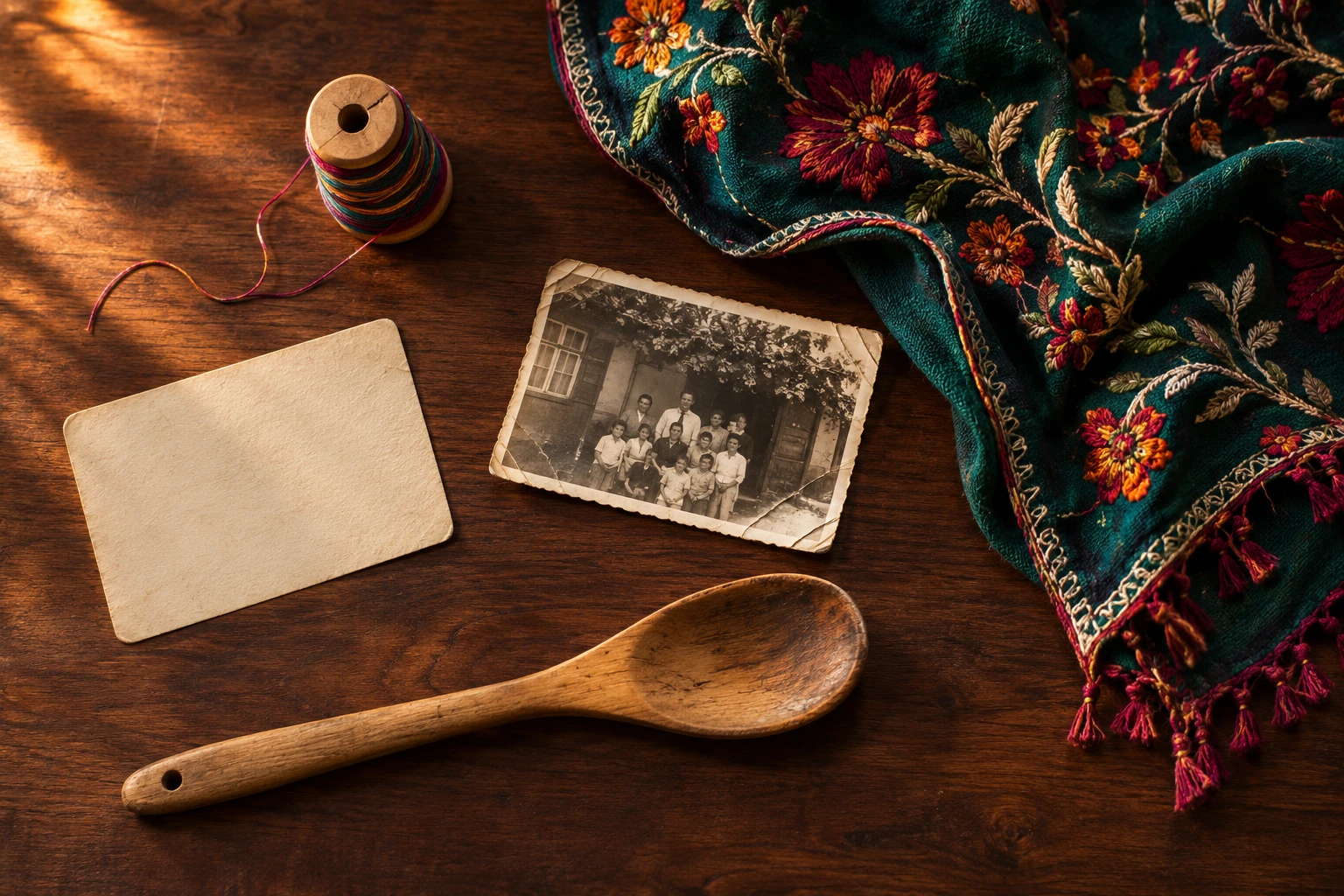
Start with something small enough to hold
You do not need a complete family tree or an extraordinary migration story to explore heritage. Start with an object or memory that means something to you: a kitchen tool, a playlist, a greeting, a fabric pattern, or a snack someone makes a particular way. Its meaning may be personal rather than widely shared.
Heritage is not a quiz about knowing the right traditions. You may feel connected to some parts of your family’s culture and distant from others. You may be learning a language, remembering one, or finding a connection through music or art instead. Those starting points are worth exploring.
Make a tiny archive
Choose one item and give it a page. Draw it or photograph it, then write three things: what it is, what it reminds you of, and what you still wonder about it. If words feel limiting, try colors, symbols, a short audio note, or labels in more than one language.
An archive can hold questions as well as answers. Perhaps you do not know why an object matters, or two relatives remember it differently. Keep those differences visible rather than deciding that one version must become the official family story.
Invite a story without expecting one
If you ask someone about an object, begin with an invitation: ‘Would you like to tell me anything about this?’ Let them decide where to begin and when to stop. Some memories are joyful, some complicated, and some private. Curiosity is most useful when it comes with respect for a boundary.
Ask permission before recording, photographing, or sharing. Agree on who will see the result and whether the person wants their name included. A story shared at a kitchen table is not automatically a story available for a website or social media post.
Let your version keep growing
You can remix what you discover into a zine, a collage, a poem, or a playlist with short notes. Keep the original context where you can, and distinguish what someone told you from what you imagined. Your creative response can sit beside a family story without replacing it.
Heritage Lab invites this kind of open exploration. The aim is not to prove where you belong. It is to make room for the connections you want to understand, celebrate, question, or carry forward. Contact NewRoots to ask about current opportunities.
This original article offers general educational ideas, not individualized legal, medical, or mental health advice. Program availability must be confirmed directly.